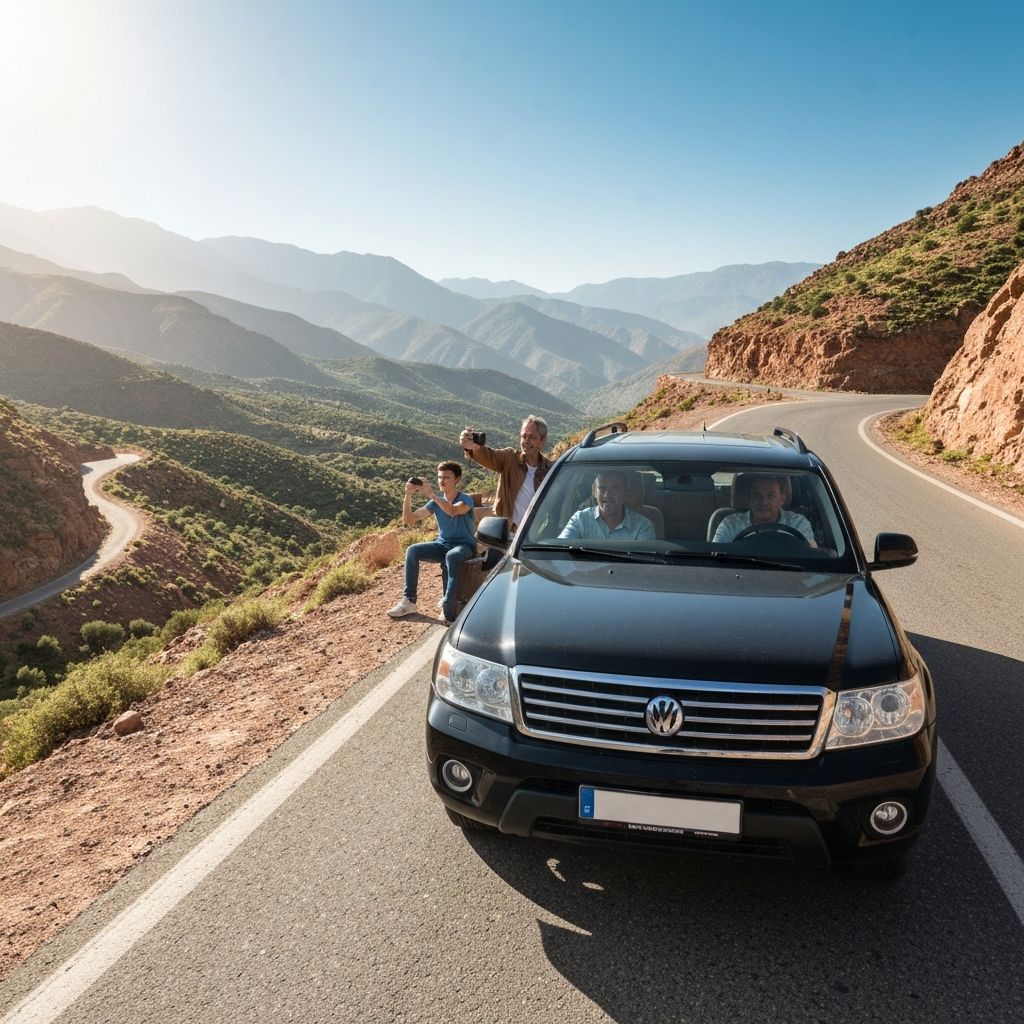
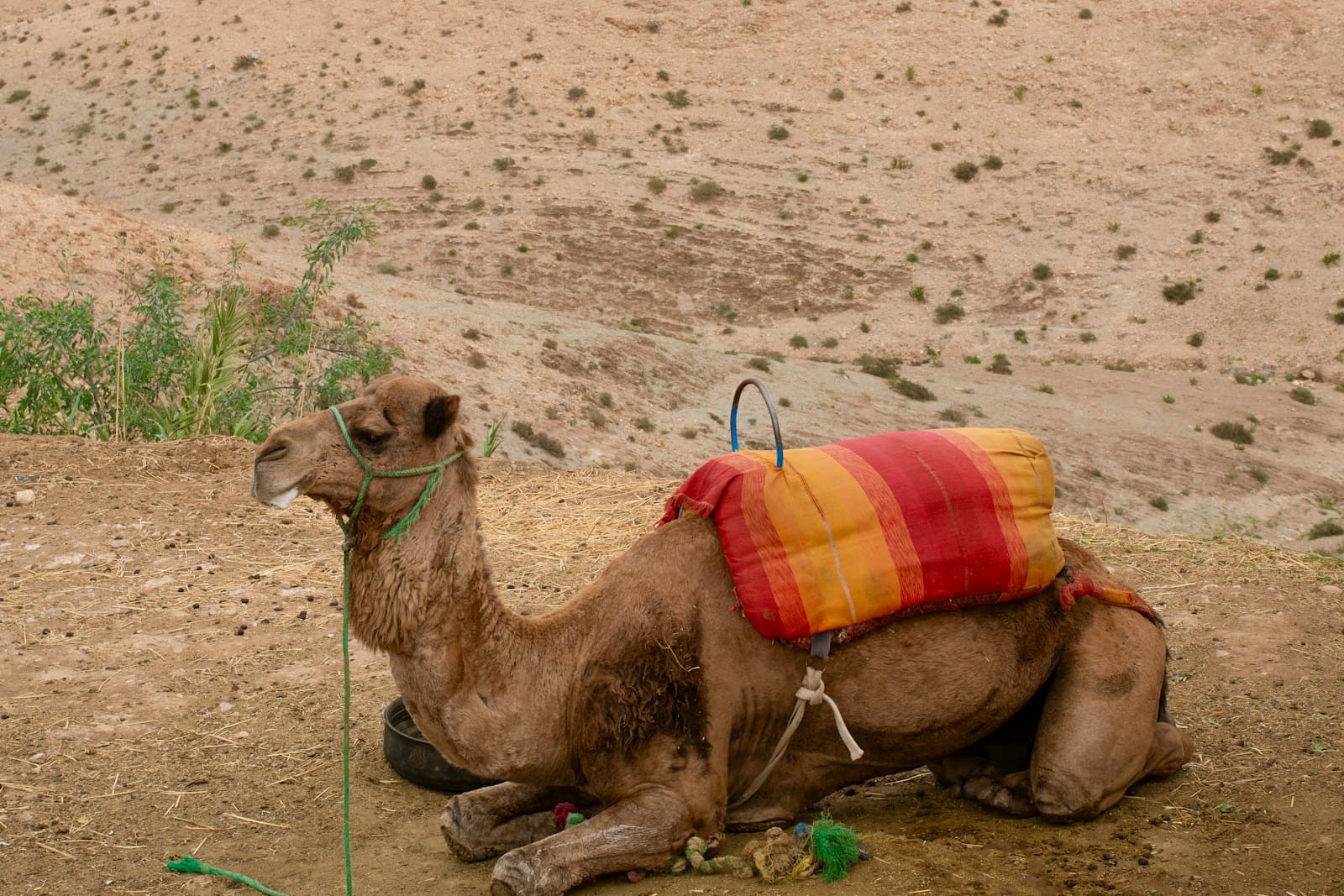
How to drive the Ourika Valley from Marrakech in your own rental car: the route to Setti Fatma, the stops on the way, parking, the waterfalls walk, when to go and which car you need.
The Ourika Valley is the greenest corner of the High Atlas near Marrakech, and the easiest mountain day trip you can make with a rental car. About an hour and a half after leaving the city, you are beside a mountain river, under walnut trees, with red earth villages on the slopes above you and a waterfall walk waiting at the end of the road.
Most visitors come on a tour, with a fixed timetable and a lunch stop chosen for them. With your own car you leave early, before the coaches, stop where you like and stay as long as you want. This guide covers the route, the stops on the way, parking and the waterfalls at Setti Fatma, the best time to go and which car you need.
How far is the Ourika Valley from Marrakech?
Setti Fatma, the village at the end of the valley road, is about 65 kilometres from Marrakech. The drive takes 1 hour 15 minutes to 1 hour 30 minutes without stops. The road is paved all the way to Setti Fatma, where the asphalt ends.
The route
Leave Marrakech heading south on the Ourika road. The first half of the drive crosses flat farmland and olive groves, with the snowy peaks of the Atlas getting closer on the horizon.
After about 34 kilometres you reach Tnine Ourika, the market town where the valley begins. From here the road follows the Ourika river into the mountains. The valley narrows, the fields turn into terraces, and the villages are built in red earth on the slopes. Further on, a road branches off and climbs to the ski resort of Oukaïmeden, which our Atlas Mountains from Marrakech by car guide covers.
The road ends at Setti Fatma, a village squeezed between the river and the mountains, where cafés and small restaurants line the water.
Driving tips for the valley
- Slow down in the villages. The road runs through the middle of them, and people, mules and children walk along the edge.
- Ignore the parking wavers. In the last kilometres, people on the roadside wave cars into car parks and restaurants. Keep going until you reach the place you actually want.
- Take the bends gently. The valley road is narrower than the road from Marrakech, with some tight curves and few places to overtake.
- Fill up in Marrakech. It is simpler than looking for a station in the valley.
- Expect a police checkpoint at the edge of the city. It is routine, quick and polite. The officer usually asks for your driving licence, the rental contract and the car papers, which are in the glovebox.
Stops on the way
The valley is at its best when you take your time. A few stops worth considering, in the order you reach them:
Anima Garden. Near the start of the valley, the Austrian artist André Heller created a garden of palms, roses and cactus with sculptures hidden along the paths and wide views of the Atlas. It is a calm place for an hour, and there is parking for visitors.
The Monday souk in Tnine Ourika. "Tnine" means Monday, and on Mondays the town fills with farmers and traders from the surrounding villages selling vegetables, spices, livestock and household goods. It is a working market, not a tourist show. If your trip falls on a Monday, arrive in the morning.
The Berber Ecomuseum in Tafza. A short detour a few kilometres after Tnine leads to an old three-storey mud-brick house, restored as a small museum of everyday Berber life in the valley: tools, clothes, jewellery and old photographs. It gives you context for the villages you are driving through.
Cooperatives and pottery. Along the road you will pass argan oil and herb cooperatives and small pottery workshops. Stop if something catches your eye. There is no obligation to buy.
Setti Fatma and the waterfalls
Setti Fatma is the reason most people drive up the valley. Above the village, a series of waterfalls tumbles down a side valley, and the walk up to them is the classic Ourika outing.
Parking
Park in Setti Fatma itself, where attendants look after the cars. Agree the price before you leave the car, and keep some dirhams ready. On weekends and holidays the spaces near the end of the road fill up by late morning, which is one more reason to arrive early.
The walk to the waterfalls
The path starts from the village and crosses the river, then climbs a rocky side valley. The first waterfall is the easiest to reach. Going further, to the higher falls, takes longer and involves scrambling over boulders, with up to about two hours for the full walk there and back.
You can walk on your own, but local guides wait in the village and know the safest route, which helps if you want to go beyond the first fall or have children with you. If you take a guide, agree the price before you start.
Wear proper shoes, not sandals: the rocks are uneven and can be wet. Bring water, and take your time on the way down, which is where most slips happen.
Lunch by the river
In the warm months, the restaurants in Setti Fatma set their tables right on the riverbank and even in the shallow water. A tagine with your feet beside the river is the classic end to the walk. Ask the price of the meal before you order.
A word on safety
The Ourika river can rise very quickly after a storm higher up in the mountains, even when the sky over the valley is clear. If it is raining in the mountains, or the forecast shows storms, stay away from the riverbed and the riverside cafés, and leave the walk for another day.
When to go
- Spring (March to May): the best season. The valley is green, the fruit trees flower, and the peaks above still carry snow.
- Summer (June to September): the valley is cooler than Marrakech and the river is the main attraction. It is also the busiest time, especially at weekends, when families from Marrakech head up to the water.
- Autumn (October and November): clear days, fewer visitors, and the walnut harvest in the villages.
- Winter (December to February): cold mornings and snow on the peaks. The valley road stays open, but the waterfall path can be slippery.
Whatever the season, go on a weekday if you can, and leave Marrakech by 9 am. By late morning on a Sunday the last kilometres to Setti Fatma can be slow.
A simple day plan
- 9:00: leave Marrakech on the Ourika road.
- 9:45: stop at Anima Garden or the Berber Ecomuseum.
- 11:00: arrive in Setti Fatma, park and walk up to the waterfalls.
- 13:30: lunch by the river.
- 15:30: drive back down the valley, with a stop at a cooperative.
- 17:00: back in Marrakech.
With more time, spend a night in a guesthouse in the valley, or combine Ourika with the drive up to Oukaïmeden.
Which car for the Ourika Valley?
The road is paved all the way, so any of our cars will do. You do not need an SUV or a 4x4.
- Small and easy to park: the Kia Picanto, automatic, from €28 a day, or the Dacia Sandero, manual, from €28 a day. Ideal for the narrow parking near Setti Fatma.
- More comfortable on the bends: an automatic like the Hyundai Grand i10 (€30 a day) or the Hyundai Accent (€35 a day), so you are not changing gear on every curve.
- A higher driving position: the Dacia Duster, from €46 a day, if you like to see over the bends.
Every price includes CDW insurance, unlimited kilometres and free delivery to your hotel or riad in Marrakech. Nothing is paid online and you can cancel for free at any time.
Frequently asked questions
How far is the Ourika Valley from Marrakech? Setti Fatma, at the end of the valley road, is about 65 kilometres from Marrakech, which takes 1 hour 15 minutes to 1 hour 30 minutes by car. The valley itself begins at Tnine Ourika, about 34 kilometres from the city.
Can I drive to the Ourika Valley myself? Yes. The road is paved all the way to Setti Fatma and easy to follow. Take the bends gently, slow down in the villages, and arrive early to find parking.
Do I need a guide for the Setti Fatma waterfalls? Not for the first waterfall, which you can reach on your own with good shoes. For the higher falls, a local guide knows the safest route over the rocks. Agree the price before you start.
Do I need a 4x4 for the Ourika Valley? No. It is asphalt all the way. A small car is easier to park in Setti Fatma.
When is the best time to visit the Ourika Valley? Spring, when the valley is green and the peaks are white. In summer it is a cool escape from Marrakech, but go on a weekday to avoid the weekend crowds. Avoid the river when storms are forecast in the mountains.
Rent a car for the Ourika Valley
We deliver your car to your hotel or riad in Marrakech on the morning of your trip, with CDW insurance and unlimited kilometres included. Our cheap car rental in Marrakech starts at €28 a day, and our guide to driving in Morocco covers the road rules before you set off. For another easy escape from the city, read our Agafay Desert by car guide.