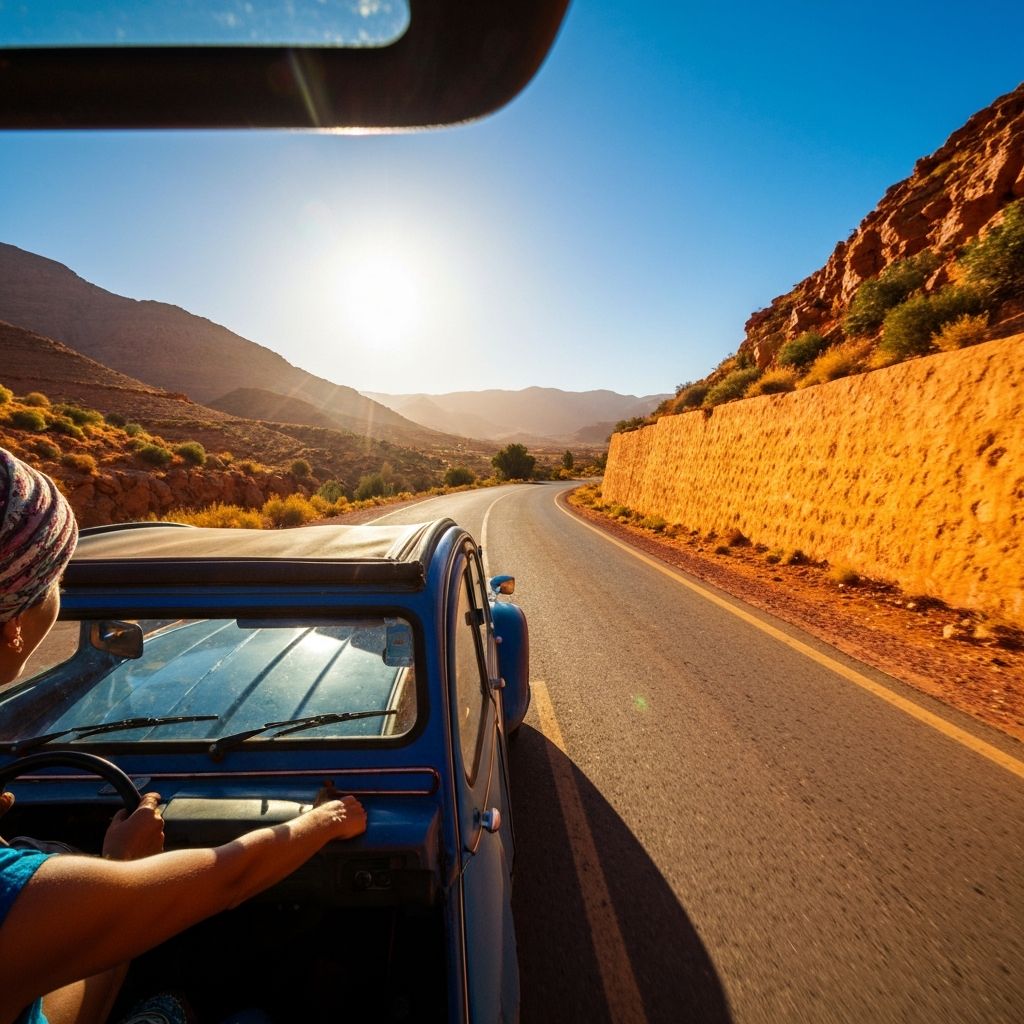
Driving in Morocco is safe and straightforward for tourists with a valid driving licence. Speed limits are 120 km/h on motorways, 100 km/h on national roads, and 60 km/h in towns. Police checkpoints are routine — have your licence, passport, and rental agreement ready. Most major routes from Marrakech to the Sahara, Atlas Mountains, and Atlantic coast are fully paved. A standard economy car is sufficient for most trips; a 4x4 is recommended for mountain passes and desert pistes.
Morocco drives on the right, same as continental Europe, USA, and most of the world. Steering wheels are on the left.
Motorways: 120 km/h. National roads: 100 km/h. Urban areas: 60 km/h. School zones: 40 km/h. Unmarked roads: 60 km/h default.
Priority varies. In cities, vehicles already in the roundabout usually have priority. On rural roundabouts, entering traffic may have priority. Slow down and observe.
Headlights are required at night and in tunnels. Flashing headlights from oncoming traffic typically means police ahead — slow down.
Using a handheld phone while driving is illegal and subject to fines. Hands-free calls are permitted.
The blood alcohol limit is 0.02% — effectively zero. Morocco enforces this strictly. Do not drink and drive.
Mandatory for all passengers in all seats. Children under 10 must travel in the rear seat. Child seats are available from ASTERCARS on request.
Moroccan law requires a warning triangle and reflective vest in all vehicles. All ASTERCARS rental cars include these.
Routine, common, and nothing to worry about if you have your documents.
Four of the most rewarding road trips you can do from Marrakech — all accessible with an ASTERCARS rental.
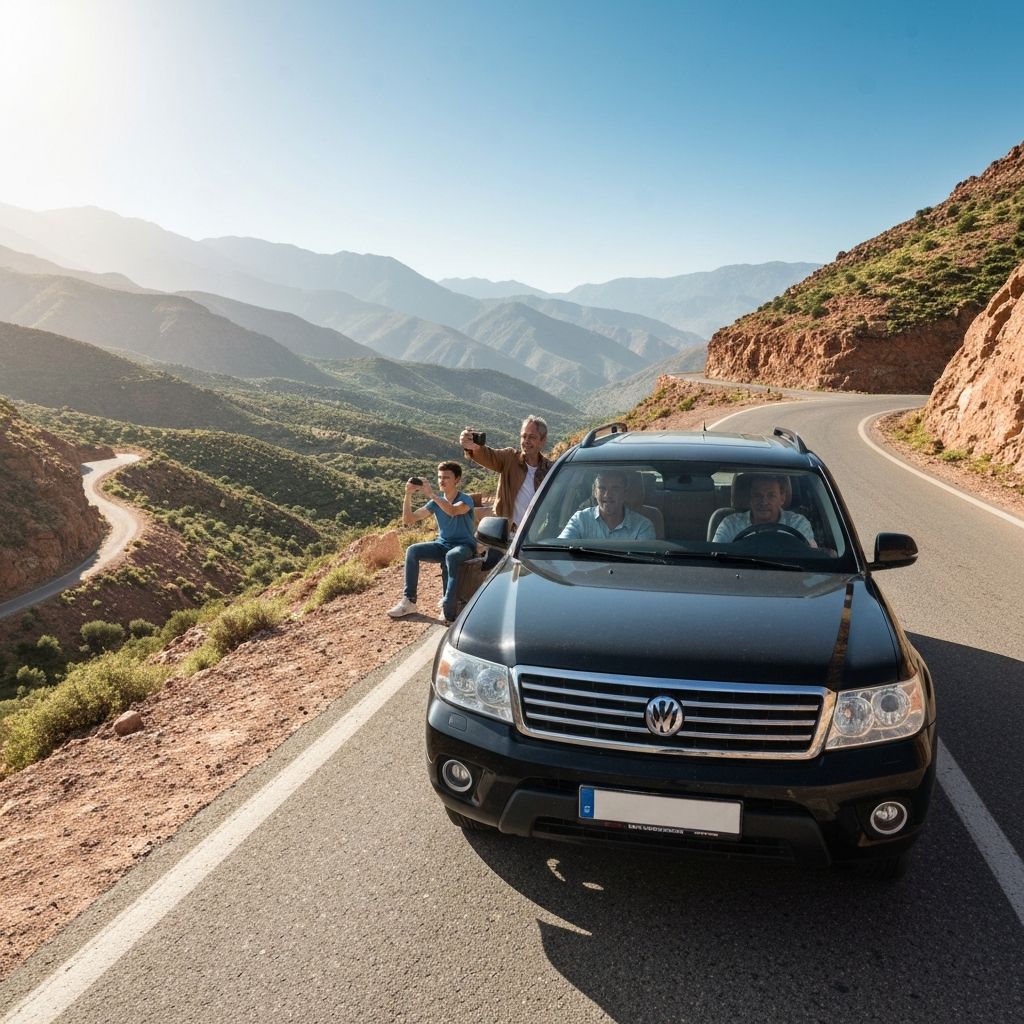
Highlights: Imlil village, Oukaïmeden, Tizi n'Test pass, Berber villages
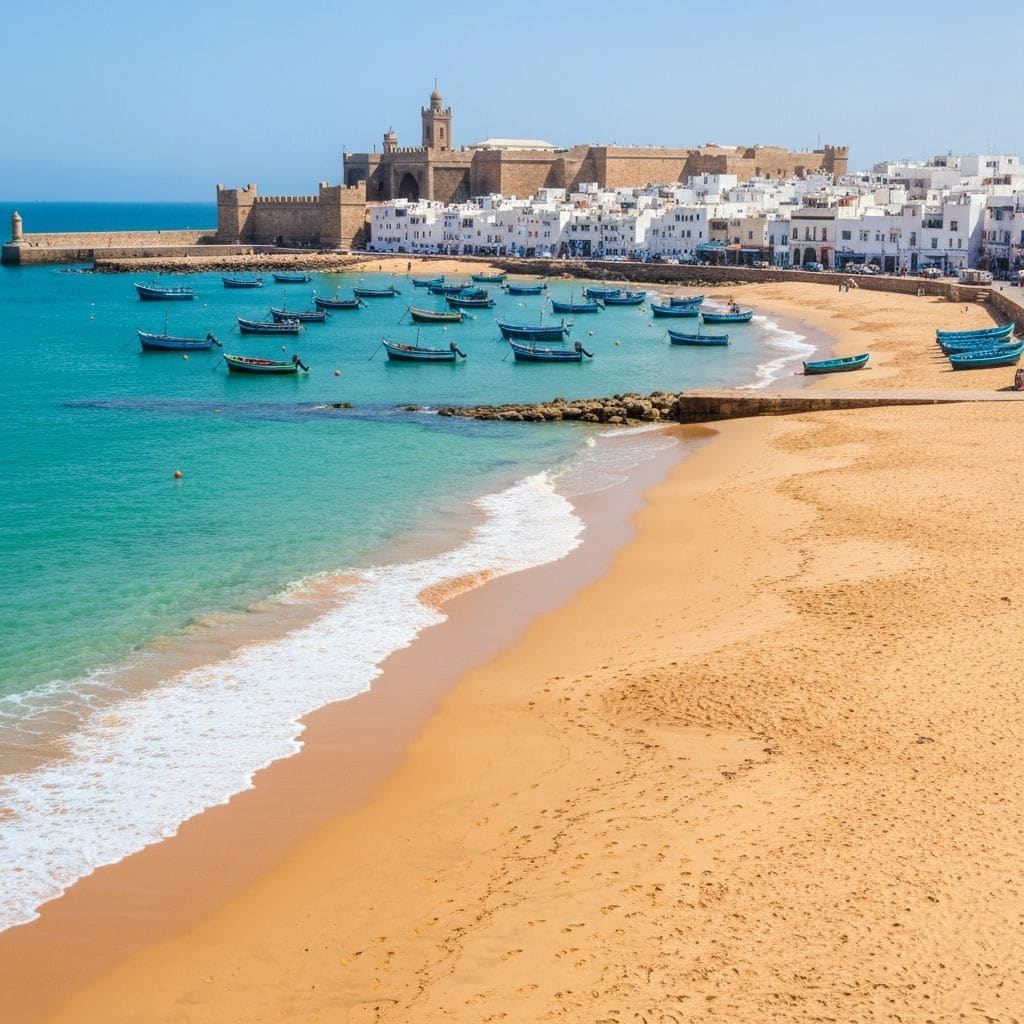
Highlights: Argan oil cooperatives, Atlantic coast, UNESCO medina, surfer beaches
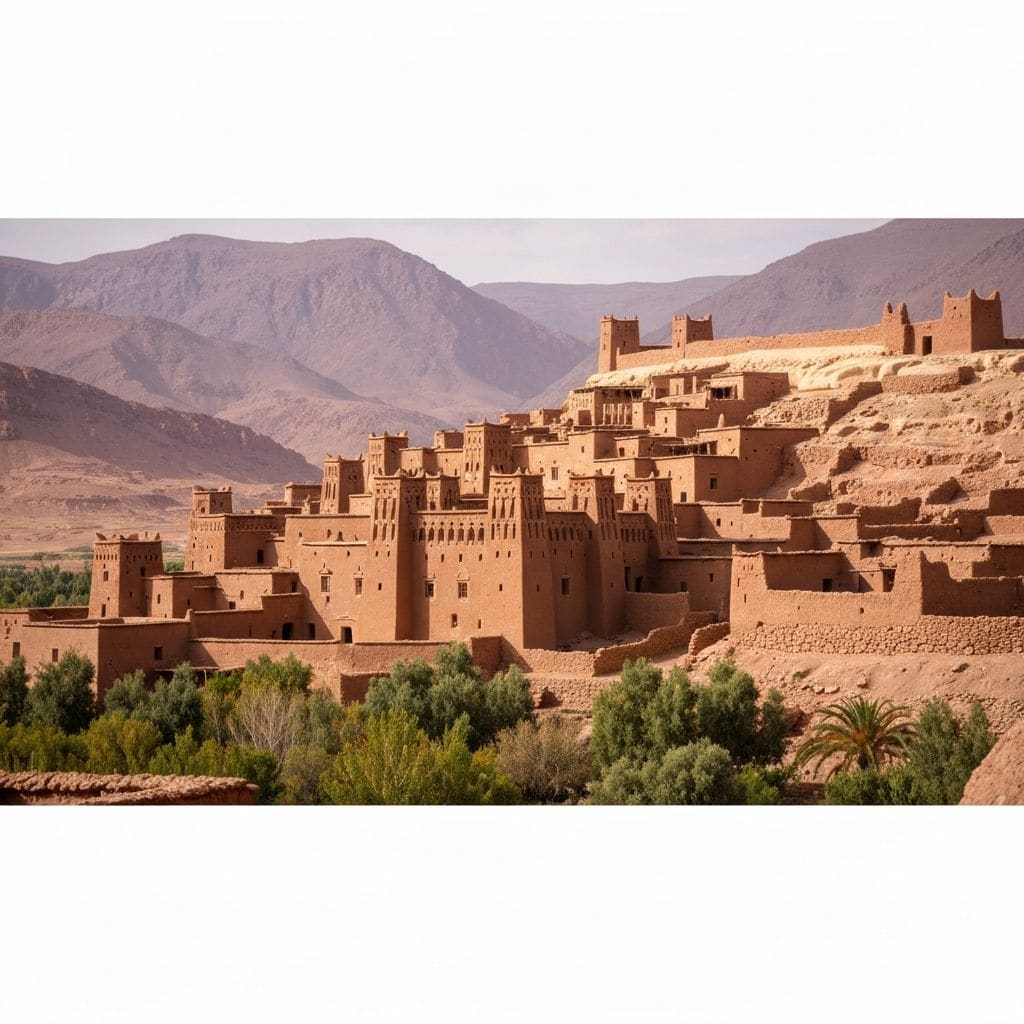
Highlights: Aït Benhaddou UNESCO kasbah, Draa Valley, rose valley
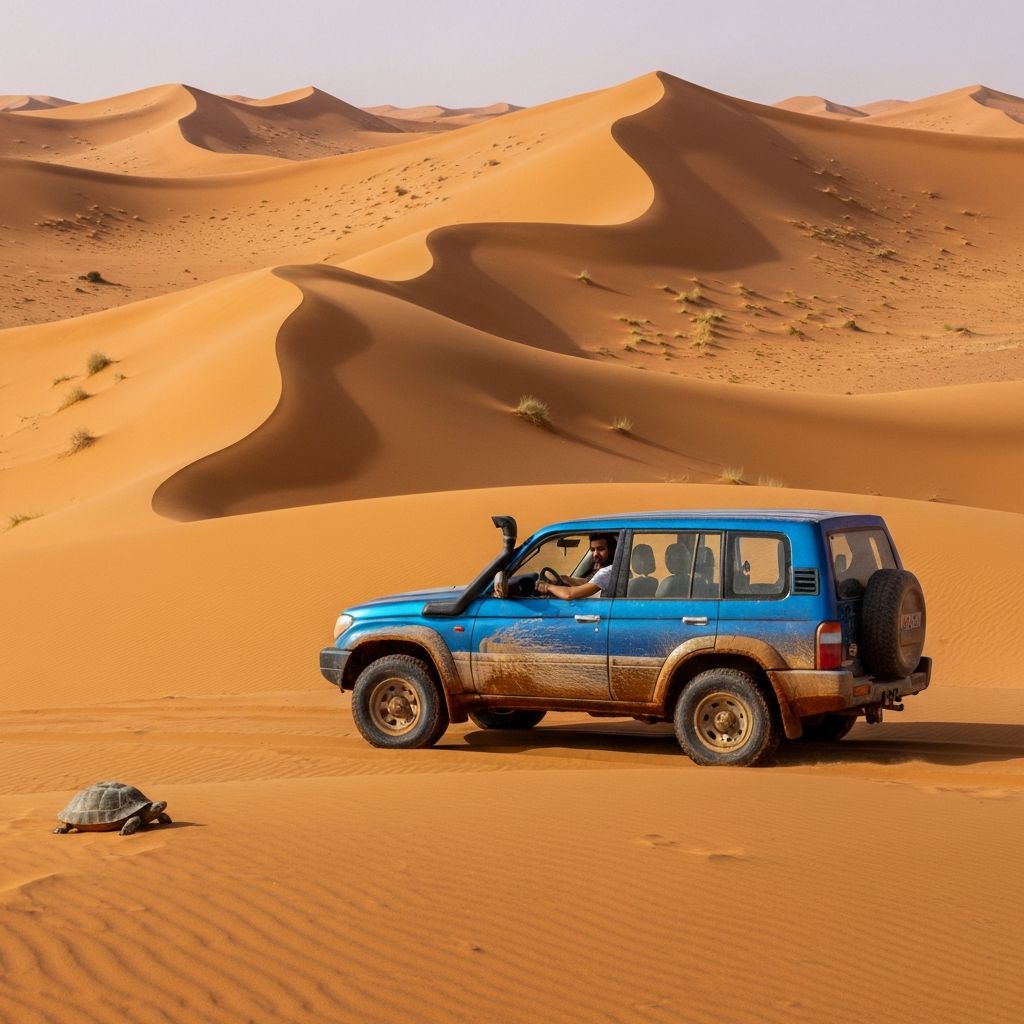
Highlights: Dadès gorges, Todra gorge, Erg Chebbi dunes, camel trekking
Yes. Millions of tourists drive in Morocco every year without incident. The main risks are aggressive urban traffic in Marrakech and Casablanca, unmarked speed bumps on rural roads, and animals on the road at night. Drive defensively, stick to speed limits, and avoid driving after dark on rural roads where possible.
You need: (1) a valid driving licence held for at least 1 year — EU, UK, US, Canadian, and most international licences are accepted; (2) your passport or national ID; (3) the rental agreement from ASTERCARS; (4) the vehicle insurance certificate. Keep all documents in the car at all times — police checkpoints are frequent.
For most nationalities, your national driving licence is sufficient. An IDP is recommended but not legally required for EU, UK, US, Canadian, and Australian licence holders. If your licence is not in Latin script (e.g. Arabic, Chinese, Japanese), an IDP is required.
Speed limits: 120 km/h on motorways (autoroutes), 100 km/h on main national roads (routes nationales), 60 km/h in urban areas, and 40 km/h in some town centres. Speed cameras are common. Police with radar guns are frequently positioned just after town exit signs where the limit jumps to 100 km/h.
Police checkpoints are routine and nothing to worry about. Slow down, roll your window down, and have your documents ready. Officers will typically glance at your rental agreement, passport, and driving licence. Be polite, answer questions briefly, and you will be waved through within 1–2 minutes in most cases.
Yes — the road to Merzouga (Erg Chebbi, the main Sahara dune area) is fully paved all the way. A standard economy car can make the drive. However, if you plan to drive on sand tracks around the dunes or visit remote desert camps off the main road, a 4x4 is required.
Motorways and main national roads are generally well-maintained. Mountain roads and rural secondary roads can have potholes, unmarked speed bumps, and narrow sections. Mountain passes like Tizi n'Tichka (2,260m) are paved but require careful driving, especially in winter when snow and ice are possible.
Petrol (Sans Plomb 95) and diesel (Gasoil) are widely available at petrol stations across Morocco. LPG is not commonly available. On long desert routes (e.g. towards Merzouga), fill up whenever you pass a station — gaps of 100+ km between stations are possible in remote areas.
No. ASTERCARS rental vehicles are authorised for use within Morocco only. Cross-border driving into Algeria, Western Sahara territory, or Mauritania is not permitted under the rental agreement.
Most street parking in Marrakech is managed by unofficial parking attendants (gardiens de voiture) who wear orange or red vests. Tip them 5–10 MAD (€0.50–€1) when you leave — your car will be looked after. Paid car parks exist near major attractions. Never leave valuables visible in a parked car.