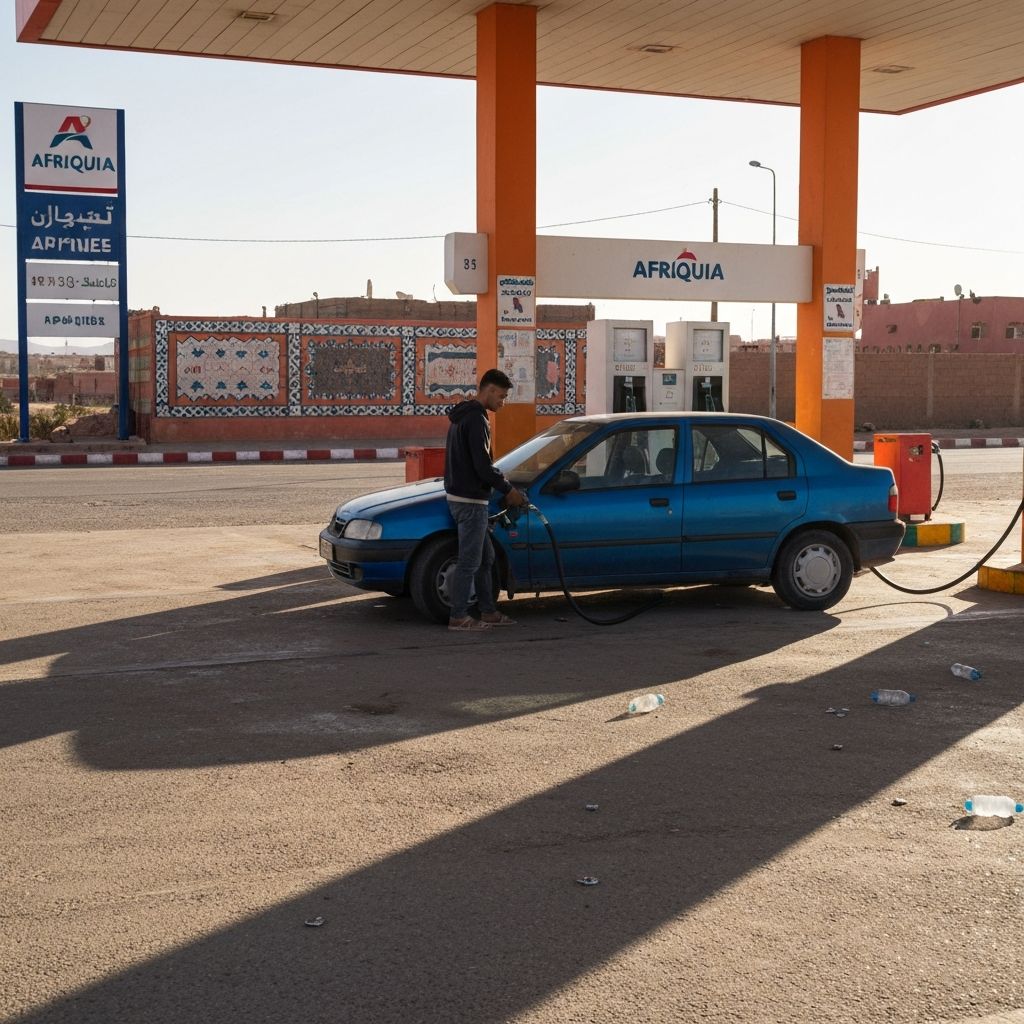
Everything rental car drivers need to know about fuelling up in Morocco: petrol vs diesel, gas station etiquette, and how to pay on the road.
Gas stations in Morocco work a bit differently than Europe or North America, so here's the inside scoop. First, there's almost always an attendant who pumps the gas for you - it's not self-service like you might be used to. Pull up, leave your car running or not (your choice), and tell them how much you want in dirhams or ask them to fill it up ('le plein' in French or 'aamar' in Arabic). Tipping isn't required but 5 dirhams is appreciated, especially if they check your oil or clean your windshield. Know your fuel type before you go - most rental cars take 'Sans Plomb' (unleaded petrol, usually 95 octane) or 'Gasoil' (diesel). Double-check your rental agreement - putting the wrong fuel is expensive to fix. Diesel is cheaper but petrol cars are more common in our fleet. Major chains are Afriquia (green), Total (red), Shell (yellow), and Petrom. They're all reliable with consistent quality fuel. Prices are government-controlled and similar everywhere - currently around 13-14 dirhams per liter for petrol. Gas stations are plentiful in cities and along major highways, but can be sparse in rural areas. My rule: never let your tank drop below quarter-full, especially if you're heading to remote areas like the desert or deep Atlas Mountains. Our Sahara 4x4 adventure guide has more tips for desert driving preparation. Some stations close late at night in small towns, though highway stations typically stay open 24/7. Most stations now accept cards (Visa and Mastercard), but always carry cash as backup - some smaller stations are cash-only. When you return your rental, fill up at the last station before the airport or rental location to avoid refueling charges. Keep your fuel receipts - some companies want to see them. And here's a insider tip: the Afriquia stations often have decent bathrooms and small shops where you can grab snacks and water for the road. There's one right outside Marrakech Menara Airport - perfect for topping up as soon as you pick up your rental. We hand every car over with a full tank, so collecting at the airport means you can drive straight out without a first stop. Distance between stations is the thing worth planning around, because it varies enormously by route. The motorway to Casablanca and the main road to Essaouira and Agadir are well served, and you will rarely go more than 40km without an option. Head south and it changes: past Ouarzazate toward Zagora or Merzouga the gaps stretch, and some village pumps run dry at the end of a long weekend. On those routes, fill at every major town whether or not you think you need to, and treat a half tank as your floor rather than a quarter. If you do put the wrong fuel in, do not start the engine. That single decision is the difference between a drain-and-flush and a repair bill running into thousands of dirhams. Call us straight away on the number in your rental agreement and we will arrange recovery. Petrol is Sans Plomb and usually green-handled; diesel is Gasoil and usually yellow or black. Check the filler cap rather than trusting the colour, because it is not standardised across chains. A few practical notes. Attendants do not expect a tip for a straight fill, though 5 dirhams is normal if they clean your windscreen or check your oil. During Ramadan, staffing thins around sunset and you may wait longer at that hour. Highway service areas have the cleanest facilities and are the sensible choice for a long-drive break. And when you return the car to us, the last station on the Route de Safi or the airport approach is the convenient place to top up. We ask for the tank as full as you received it, and a photo of the gauge saves any discussion.